 Basket (0)
I first encountered Nigel Kennedy when he was a shy-looking 14-year-old pupil at the Yehudi Menuhin School, playing the Bruch Violin Concerto on the occasion of the school’s annual showcase concert in Cambridge. Dressed in his best suit with neatly Brylcreemed hair, he looked like a little boy lost – and played like an angel. At the time, to supplement my student grant, I was junior music critic for the Cambridge Evening News (they paid £1 per hundred words, so it didn’t go very far) and I never forgot his playing.
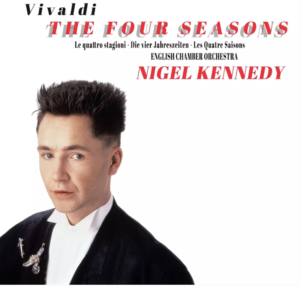 Fast forward not much more than a decade, and he was back in Cambridge, on a concert tour promoting his rather slash-and-burn recording of the Vivaldi Four Seasons. By then he was famous, as much for his eccentric persona as his playing. His concert attire might have come out of a biker’s dressing-up box, all chains and leather, his attempt at a rough accent wouldn’t have got him into his local amateur dramatic society . . . but he still played like an angel, even if his Vivaldi might not have been quite what the composer had in mind. He wasn’t the only celebrity to adopt an invented persona – it’s what Noel Coward and Barry Humphries did, after all – but he had a good and sincere reason for it. He saw classical music starting to retreat to the sidelines of our national life, and he wanted to fight back. If he presented himself as a rough, working-class, football-loving lad, he might make everyone who could relate to that image love Beethoven and Elgar as much as he did.
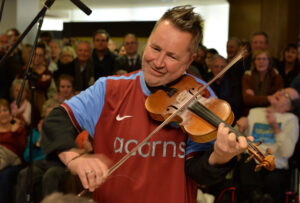
It didn’t work. As I looked around the audience packing the Cambridge Corn Exchange, I saw a sea of kindly middle-aged mums with more or less reluctant spouses in tow. Not a hairy biker to be seen. Mothers always know: they could see right through the disguise to the little lost boy with a sublime gift.
Nigel wasn’t wrong in seeing the tide going out on classical music as a pillar of our civilisation, something that is everyone’s birthright, something to nurture and celebrate. We in the musical profession may not all adopt Nigel’s strategy, but we all want to achieve his goal of bringing the genius and transformative power of music to everyone who has ears to hear. Why is it such a struggle to get that message across to our politicians, media barons, educators and cultural influencers?